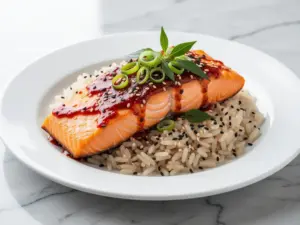
It was a Tuesday night in November, the kind where the wind is howling outside and my kitchen feels like the only warm place in the world. I was exhausted. I had just walked through the door from a long shift at work, my shoulders were tight, and my brain was completely fried. The last thing I wanted to do was stand over a stove, but the idea of ordering takeout made me feel guilty and broke. I wanted something hot, comforting, and deeply flavorful—something that felt like a treat without the three-day hangover of greasy restaurant food.
I was staring into my fridge, hunting for inspiration, when I spotted a lone fillet of salmon and a jar of gochujang paste I’d bought months ago and completely forgot about. I also had honey, soy sauce, and a bag of jasmine rice that was begging to be cooked. It wasn’t a plan. It was a desperate improvisation. I threw together a quick glaze, seared the salmon, and cooked up some rice with toasted sesame seeds. When I took that first bite, the sweet heat of the gochujang mingling with the rich, buttery fish, I literally stopped chewing. It was better than any salmon bowl I’d ever ordered from a delivery app. It was vibrant, complex, and incredibly fast.
That accidental dinner became a weekly ritual. I’ve made this gochujang honey glazed salmon with toasted sesame rice at least twenty times since that night. I’ve tweaked the spice levels, tested different rice varieties, and figured out exactly how to get that caramelized glaze without burning the sugars. This recipe isn’t just easy—it’s my answer to “what’s for dinner” when I have zero energy but zero desire for mediocrity. It’s the kind of meal that makes you forget about takeout entirely. And the best part? You can have it on the table in 20 minutes. Seriously. Twenty. That’s less time than it takes to scroll through delivery apps and wait for a driver to find you.
Why You’ll Love This Gochujang Honey Glazed Salmon
There are about a dozen reasons I keep coming back to this dinner, but let’s be real—you probably have two main questions: Is it actually good? And is it actually easy? The answer to both is a resounding yes. Here’s why this gochujang honey glazed salmon has completely taken over our weeknight rotation.
- Flavor Explosion in Every Bite — Gochujang is fermented chili paste, which means it’s not just spicy. It’s umami-rich, slightly sweet, and deeply savory. When you mix it with honey, you get this sticky, glossy glaze that clings to the salmon. It’s complex in a way that basic soy-ginger sauces just aren’t. I’ve served this to friends who claim they “don’t like spicy food,” and they’ve asked for the recipe within five minutes of eating.
- Lightning Fast Weeknight Dinner — I’m talking 20 minutes from start to finish. Ten minutes to make the glaze and cook the rice, ten minutes to sear the salmon. This is perfect for those nights when you get home late and just want to eat. I make this on Wednesdays when I’m too tired to think, and it never fails to save the evening.
- Healthier Than Takeout (But Tastes Just as Good) — Restaurant salmon bowls are often drowning in sodium and hidden oils. This version is packed with omega-3s, lean protein, and fiber from the rice. It’s nourishing without being boring. I feel good eating this, but it still hits that comfort food craving spot.
- Pantry-Friendly Ingredients — You probably have most of this already. Salmon, rice, honey, soy sauce, gochujang, sesame oil, and sesame seeds. If you keep a jar of gochujang in your fridge (and you should, it’s a game-changer), you can make this on a whim. It’s not a niche ingredient anymore; it’s a staple.
- Customizable Heat Level — Love spice? Add more gochujang or some red pepper flakes. Hate heat? Use a little less and boost the honey. This recipe bends to your preferences. I make it mild for my kids and spicy for my husband, and everyone wins.
This is my go-to when I need dinner to just work. No complicated techniques, no weird ingredients, just reliable, delicious food that makes everyone happy. It’s the kind of meal that leaves you satisfied, not stuffed and sluggish.
Ingredients You’ll Need
Here’s the best part: this gochujang honey glazed salmon relies on simple, high-quality ingredients. You don’t need a specialty store. You just need to know what to look for. I’m particular about three things here, and I’ll tell you exactly why.
For the Salmon and Glaze
Salmon fillets (4 pieces, about 6oz each / 680g) — Look for wild-caught if you can find it and afford it, but farmed is fine too. The key is that the fillets are of similar thickness so they cook evenly. Skin-on is easier to handle and keeps the fish moist, but skinless works if you prefer. Pat them dry with paper towels before cooking—this is non-negotiable for a good sear.
Gochujang paste (2 tablespoons / 30g) — This is the star. It’s a Korean fermented chili paste. It’s thick, red, and packed with flavor. Don’t substitute with sriracha or gochugaru (flakes); they’re different things. I always buy the Ottogi brand—it’s reliable and widely available in the Asian aisle of most grocery stores. If you can’t find gochujang, check out my honey sriracha glazed meatballs for a similar sweet-heat vibe using a different protein.
Honey (2 tablespoons / 30ml) — I use regular honey. Maple syrup works too, but honey gives that specific sticky gloss. It balances the heat of the gochujang perfectly.
Soy sauce (1 tablespoon / 15ml) — I prefer low-sodium soy sauce so I can control the saltiness. Tamari is a great gluten-free alternative. Don’t use teriyaki sauce here; it’s too sweet and already has thickeners.
Sesame oil (1 teaspoon / 5ml) — Toasted sesame oil. Not the raw kind. The toasted kind has that nutty aroma that defines Asian cooking. A little goes a long way. I keep a small bottle just for finishing dishes.
Garlic (2 cloves, minced / about 1 tablespoon) — Fresh garlic only. No jarred stuff. It adds a sharp bite that cuts through the richness of the salmon.
Ginger (1 teaspoon, freshly grated / about 5g) — Fresh ginger is best. If you don’t have it, ¼ teaspoon ground ginger works in a pinch, but fresh is brighter and more aromatic.
Vegetable oil (1 tablespoon / 15ml) — For searing the salmon. I use avocado oil or light olive oil because they have higher smoke points. Don’t use extra virgin olive oil here; it’ll burn.
For the Toasted Sesame Rice
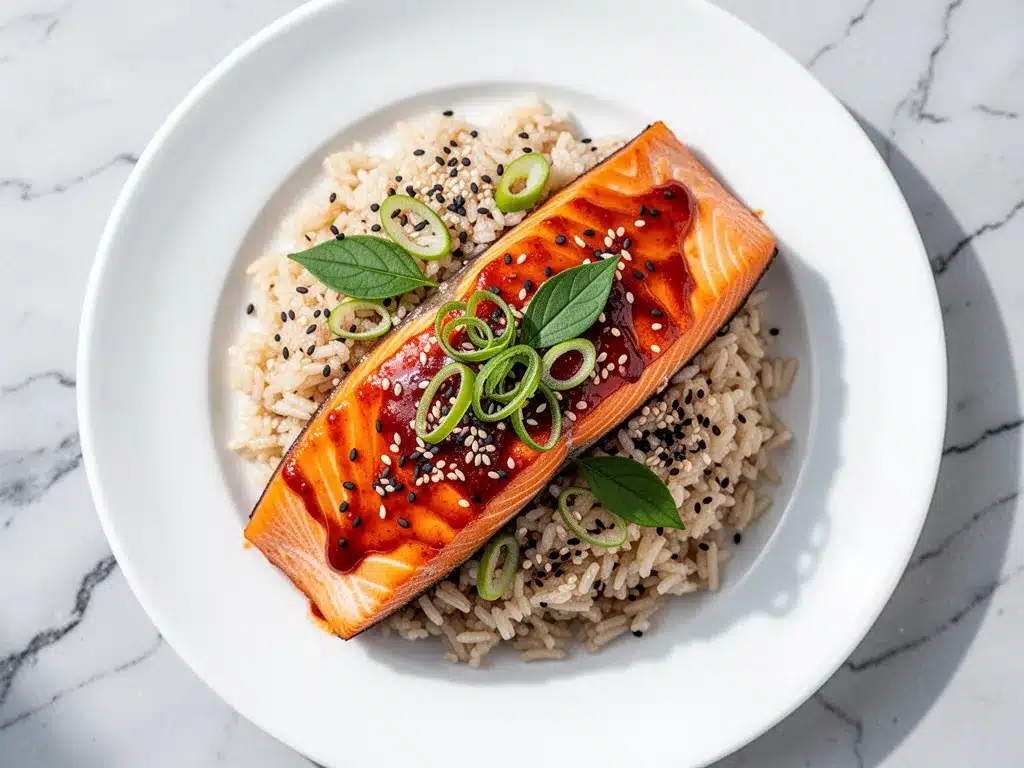
Jasmine rice (1 cup / 185g uncooked) — Jasmine rice is slightly sticky and fragrant, which is perfect for holding the sesame flavor. Short-grain sushi rice works too, but it’s chewier. Long-grain basmati is too dry for this.
Water (1½ cups / 360ml) — For cooking the rice. The ratio is important. 1:1.5 is the sweet spot for jasmine rice in most pots.
Sesame seeds (2 tablespoons / 10g) — Toasted sesame seeds. Buy them raw and toast them yourself. Pre-toasted seeds lose their flavor quickly and can taste bitter. Toasting them releases the oils and makes the rice smell incredible.
Salt (½ teaspoon / 3g) — For seasoning the rice. Adjust to taste.
Optional Garnishes: Sliced green onions, extra red pepper flakes, lime wedges, and a drizzle of extra sesame oil. I usually keep a small bowl of green onions on the counter just for this.
Equipment Needed
You don’t need fancy equipment for this. Here’s what I actually use.
Medium saucepan with lid — I use a 2-quart saucepan for the rice. It needs to be tight-fitting to steam the rice properly. My old stainless steel one works fine. Don’t use a wide, shallow pan; you need the steam to stay trapped.
Small mixing bowl — For whisking the gochujang glaze. Any size works.
Non-stick or Cast Iron Skillet — 10-inch is perfect for four salmon fillets. I prefer non-stick for easy cleanup, but cast iron gives a better sear if you’re careful. Just make sure it’s oven-safe if you decide to finish the salmon in the oven (which I usually don’t, but it’s an option).
Sharp knife and cutting board — For mincing garlic and grating ginger. A dull knife makes mincing garlic a nightmare and hurts your fingers. Learned that one the hard way.
Measuring spoons and cups — Standard stuff. Dollar store versions work fine for this.
Fork — For flaking the salmon and mixing the rice.
Optional but nice:
- Rice cooker — If you eat rice often, a rice cooker is a lifesaver. It makes perfect rice every time with zero effort. I use mine for this recipe and it’s foolproof.
- Garlic press — Saves time on mincing, but I still prefer hand-minced for ginger.
How to Make It: Step-by-Step
Alright, let’s make this! I’m walking you through exactly how I do it, including the little tricks I’ve picked up over twenty tries.
Step 1: Start the Rice (15-20 minutes)
Rinse the jasmine rice under cold water until the water runs clear. This removes excess starch and prevents the rice from being gummy. Drain well. Combine the rice and water in your saucepan. Add the salt. Bring it to a boil over high heat, then immediately reduce the heat to low, cover with the lid, and simmer for 15 minutes. Do not lift the lid! The steam is doing the work. After 15 minutes, remove from heat and let it sit, covered, for another 5 minutes. This resting period is crucial for fluffy rice.
Step 2: Toast the Sesame Seeds (2 minutes)
While the rice is cooking, heat a small dry skillet over medium-low heat. Add the raw sesame seeds. Stir constantly. They’ll start to pop and smell nutty in about 2-3 minutes. Watch them closely—they go from perfect to burnt in seconds. Once they’re golden, pour them onto a plate to cool. This smell alone will make you hungry.
Step 3: Make the Gochujang Glaze (2 minutes)
In a small bowl, whisk together the gochujang paste, honey, soy sauce, sesame oil, minced garlic, and grated ginger. The mixture will be thick and reddish-brown. Taste it. It should be sweet, spicy, and salty. If it’s too spicy, add a teaspoon more honey. If it’s too sweet, add a splash more soy sauce. Set aside.
Step 4: Prep the Salmon (3 minutes)
Pat the salmon fillets very dry with paper towels. This is the most important step for a good sear. Wet salmon steams; dry salmon sears. Season both sides lightly with salt and pepper. If your fillets are very thick, you can score the skin in a few places to help it cook evenly.
Step 5: Sear the Salmon (6-8 minutes)
Heat the vegetable oil in your skillet over medium-high heat. Wait until the oil shimmers but isn’t smoking. Place the salmon fillets in the pan, skin-side down (if using skin-on). Press down gently with a spatula for the first 10 seconds to prevent curling. Cook undisturbed for 4-5 minutes. You’ll see the color change from translucent orange to opaque pink about halfway up the sides. Flip carefully. Brush the top of the salmon generously with the gochujang glaze.
Step 6: Glaze and Finish (3-4 minutes)
Cook the salmon for another 2-3 minutes on the other side, brushing with more glaze halfway through. The glaze will bubble and caramelize, creating a sticky, glossy coating. The salmon is done when it flakes easily with a fork and reaches an internal temperature of 145°F (63°C). If you like it medium-rare, aim for 125°F (52°C). Remove from heat.
Step 7: Assemble and Serve
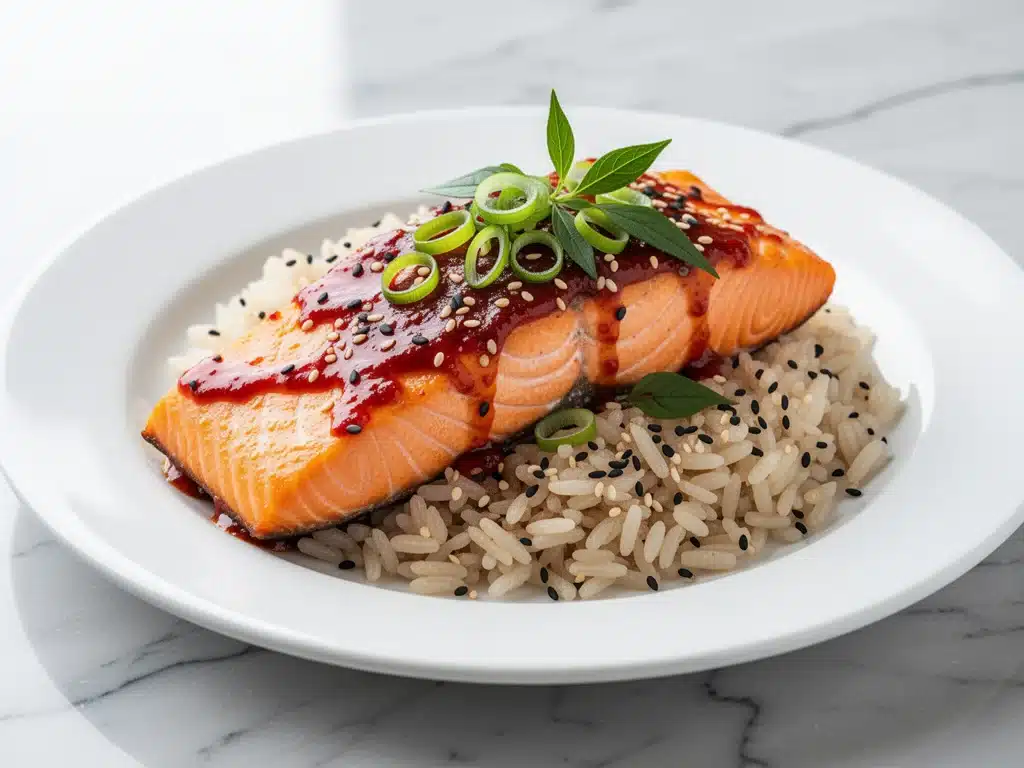
Fluff the rice with a fork and stir in half of the toasted sesame seeds. Plate the rice, top with the glazed salmon, and drizzle any remaining glaze from the pan over everything. Sprinkle with the remaining sesame seeds and sliced green onions. Serve immediately with lime wedges on the side.
Total Time: About 20 minutes (5 minutes active prep, 15 minutes mostly hands-off cooking).
Expert Tips & Tricks
Here’s everything I’ve learned from making this dozens of times. These tips will save you from my mistakes.
Don’t Skip the Sear
I know it’s tempting to just bake the salmon, but searing it in a skillet creates that crispy texture and caramelizes the glaze. Baking makes it soft. If you want crispy salmon, use a skillet. If you’re feeding a crowd, you can bake four fillets at 400°F (200°C) for 12 minutes, brushing with glaze halfway through. It’s good, but the skillet version is best.
Toast Your Sesame Seeds
I cannot stress this enough. Raw sesame seeds taste bland. Toasted sesame seeds taste like nutty heaven. It takes two minutes and transforms the entire dish. Don’t skip this step. It’s the difference between “okay” and “wow.”
Control the Heat
Gochujang varies in heat levels by brand. If you’re sensitive to spice, start with 1 tablespoon and add more to taste. You can always add heat, but you can’t take it away. I usually use 2 tablespoons for a medium kick. If you want it fiery, add a teaspoon of gochugaru (Korean chili flakes) to the glaze.
Use Fresh Ginger
Pre-grated ginger in a tube tastes metallic and artificial. Fresh ginger adds a bright, zesty note that cuts through the richness of the salmon and honey. It’s worth the extra minute to grate it.
Save the Glaze
Don’t brush all the glaze on at once. Reserve a little to drizzle over the finished dish. It adds a fresh burst of flavor and makes it look restaurant-quality.
Variations & Substitutions
Once you’ve nailed the basic version, here’s how you can mix it up. I’ve tried all of these.
Shrimp Version
Swap the salmon for large shrimp. Cook them for 2-3 minutes per side. The glaze works perfectly with shrimp. This is a quicker option—ready in 15 minutes.
Chicken Thighs
I’ve made this with boneless, skinless chicken thighs. Sear them for 5-6 minutes per side, then glaze. Chicken takes a bit longer to cook through, so keep an eye on the internal temperature (165°F / 74°C). It’s juicy and flavorful.
Tofu Bowl
For a vegetarian version, use extra-firm tofu. Press it, cube it, and pan-fry until crispy. Then glaze it just like the salmon. It absorbs the sauce beautifully. I serve this with the same sesame rice.
Spicy Mayo Drizzle
Mix 2 tablespoons of mayonnaise with 1 teaspoon of gochujang and a squeeze of lime. Drizzle this over the top before serving. It adds a creamy, cooling contrast to the spicy glaze. My kids love this version.
Gluten-Free
Use tamari instead of soy sauce. Everything else is naturally gluten-free. Check your gochujang label to ensure it’s certified gluten-free, as some brands use wheat as a filler.
Dairy-Free
This recipe is naturally dairy-free. Just make sure your gochujang and soy sauce don’t contain hidden dairy (they usually don’t). Serve with the sesame rice and you’re good to go.
Serving & Storage
How to Serve:
I usually serve this straight from the skillet at the dinner table—it looks rustic and stays warm. But here are other ways I’ve enjoyed it:
- Salad Bowl — Serve the salmon and rice over a bed of mixed greens, shredded carrots, and cucumber. Add a sesame dressing.
- Noodle Bowl — Swap the rice for soba or udon noodles. The glaze clings to the noodles beautifully.
- Side Dish — This salmon pairs well with honey roasted rainbow carrots for a sweet and savory meal.
Storage Instructions:
Store leftovers in an airtight container in the refrigerator for up to 3 days. The salmon will keep, and the rice will stay fluffy if stored properly. Reheat gently in a skillet with a splash of water to steam it back to life. Avoid the microwave if you can—it tends to make the salmon rubbery. If you must use the microwave, heat in 30-second intervals and cover with a damp paper towel.
Freezing:
I don’t recommend freezing this dish. The texture of the salmon changes when frozen and reheated, and the glaze can separate. It’s best enjoyed fresh. If you have extra glaze, you can freeze it in an ice cube tray and add it to soups or stir-fries later.
Nutrition Information
I’m not a nutritionist, but here’s the breakdown if you’re tracking. This is per serving (based on 4 servings).
- Calories: 450
- Protein: 35g
- Carbs: 40g
- Fiber: 2g
- Sugar: 12g (mostly from honey)
- Fat: 16g
- Sodium: 600mg (varies based on soy sauce)
What’s Good:
High in protein and omega-3 fatty acids from the salmon. The rice provides energy. It’s a balanced meal.
What to Know:
Higher in sodium due to soy sauce and gochujang. If you’re watching sodium, use low-sodium soy sauce and rinse the rice well. The sugar content is moderate from the honey. It’s not a diet food, but it’s nutrient-dense.
My Take:
Look, this is flavorful, rich food. It’s not a diet recipe. But it’s way better than takeout, costs less, and I know exactly what’s in it. When I want to make it lighter, I use less honey and load up on vegetables. But usually? I just eat a reasonable portion and enjoy it.
Final Thoughts
So that’s my go-to gochujang honey glazed salmon with toasted sesame rice! I’ve probably talked your ear off at this point, but when you make a recipe this often, you have a lot to say about it. This has saved weeknight dinners more times than I can count. It’s my answer to “what’s for dinner” when I’m tired, don’t want takeout, and still want something that tastes really good. My kids are happy, my husband’s happy, and I’m happy because I’m not stressed about cooking.
Make it yours! Try different add-ins, swap in your favorite vegetables, adjust the garlic (though more is always better in my opinion). The best recipes are the ones you adapt to your family’s tastes. If you make this, drop a comment and let me know what you think! I love hearing how recipes turn out in your kitchen. And if something doesn’t work, tell me that too—I’m here to help troubleshoot.
Happy cooking! And I hope your kitchen smells half as good as mine does right now.
Frequently Asked Questions
Q: Can I use sriracha instead of gochujang?
A: You can, but the flavor will be different. Sriracha is vinegar-based and thinner. Gochujang is fermented, thick, and savory. If you use sriracha, add a teaspoon of miso paste or soy sauce to mimic the umami depth. It’ll still be good, but not the same authentic taste.
Q: Why is my salmon sticking to the pan?
A: Usually, the pan wasn’t hot enough when you added the fish, or the salmon was wet. Make sure your skillet is hot before adding oil, and pat the salmon VERY dry with paper towels. If it sticks, don’t force it. Let it cook for another minute; it’ll release naturally when the crust forms.
Q: Can I make this ahead for a dinner party?
A: Sort of. You can prep the glaze and rinse the rice ahead of time. But cook the salmon fresh. Salmon cooks quickly and is best served hot. I usually make the rice first, let it rest, then sear the salmon right before serving. It takes less than 10 minutes of active work.
Q: Is gochujang very spicy?
A: It’s medium heat. It’s more savory and sweet than pure heat. It’s like a mild chili paste with depth. If you’re sensitive to spice, start with 1 tablespoon. If you love heat, go for 3 tablespoons. It’s very customizable.
Q: How do I reheat leftovers without it getting dry?
A: Add a splash of water or broth to a skillet, add your leftover salmon, and heat gently over low heat, covering the pan. The steam will rehydrate the fish. Avoid the microwave if possible. If you must use it, cover with a damp paper towel and heat in short bursts.
Q: Can I use brown rice instead of jasmine?
A: You can, but brown rice takes longer to cook (about 40-45 minutes). Adjust your timing accordingly. The nutty flavor of brown rice pairs well with the sesame, but the texture will be chewier. Jasmine is preferred for this specific dish for its fragrant, sticky quality.
Pin This Recipe!
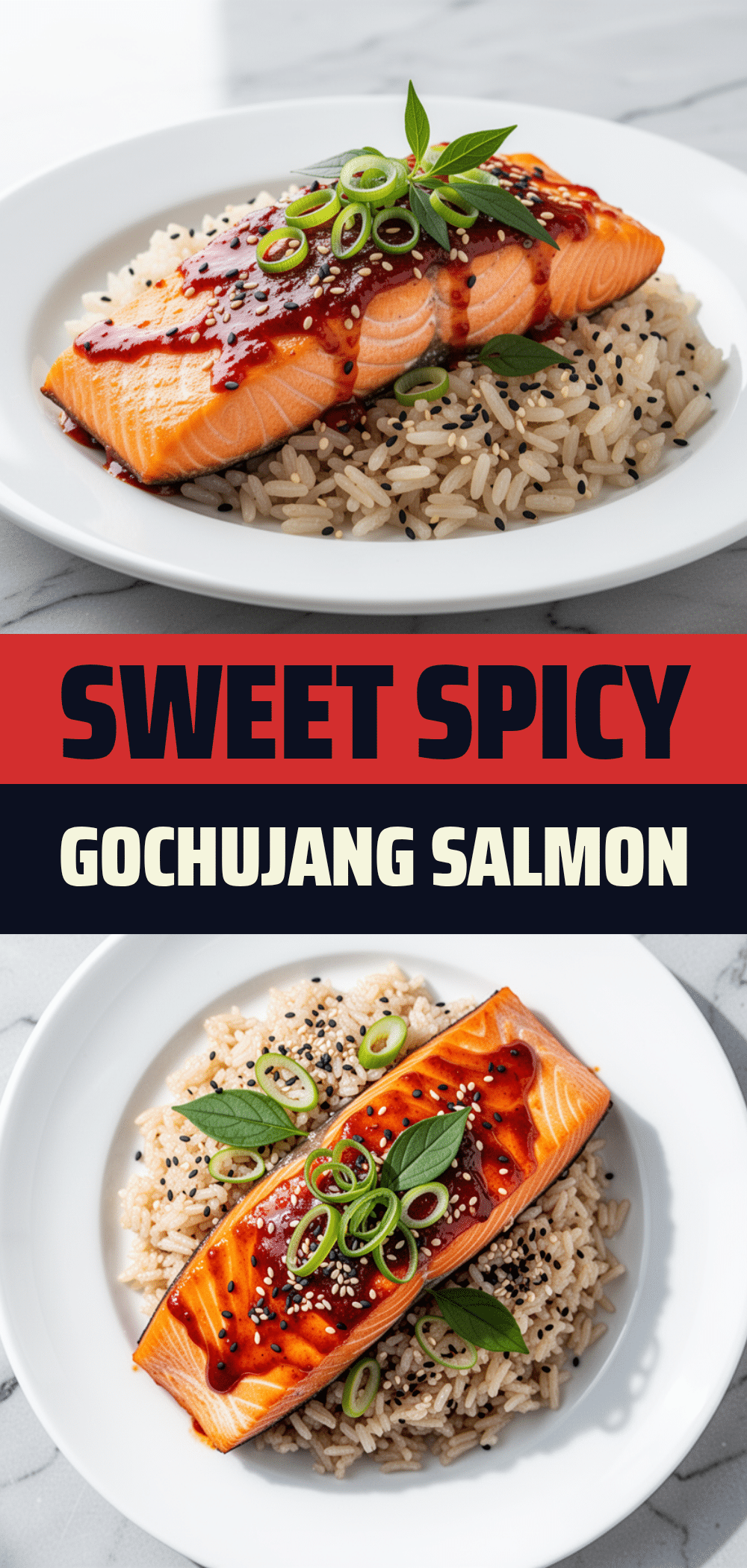

Gochujang Honey Glazed Salmon: 20-Min Easy Best Dinner
- Total Time: 20 minutes
- Yield: 4 servings 1x
Description
A quick and flavorful weeknight dinner featuring salmon seared in a sticky, sweet, and spicy gochujang honey glaze, served with toasted sesame jasmine rice. Ready in just 20 minutes.
Ingredients
- 4 salmon fillets (about 6oz each / 680g)
- 2 tablespoons gochujang paste
- 2 tablespoons honey
- 1 tablespoon soy sauce (or tamari for gluten-free)
- 1 teaspoon toasted sesame oil
- 2 cloves garlic, minced
- 1 teaspoon freshly grated ginger
- 1 tablespoon vegetable oil (or avocado oil)
- 1 cup jasmine rice (uncooked)
- 1½ cups water
- 2 tablespoons sesame seeds (raw, for toasting)
- ½ teaspoon salt (for rice)
- Salt and pepper (for seasoning salmon)
- Optional garnishes: sliced green onions, red pepper flakes, lime wedges
Instructions
- Rinse jasmine rice under cold water until clear. Drain well.
- Combine rice, water, and salt in a medium saucepan. Bring to a boil over high heat, then reduce heat to low, cover, and simmer for 15 minutes. Remove from heat and let sit covered for 5 minutes. Fluff with a fork.
- While rice cooks, toast sesame seeds in a small dry skillet over medium-low heat until golden and nutty (2-3 minutes). Set aside.
- In a small bowl, whisk together gochujang, honey, soy sauce, sesame oil, garlic, and ginger to make the glaze.
- Pat salmon fillets very dry with paper towels. Season lightly with salt and pepper.
- Heat vegetable oil in a non-stick or cast iron skillet over medium-high heat until shimmering.
- Place salmon skin-side down in the skillet. Press gently for 10 seconds to prevent curling. Cook undisturbed for 4-5 minutes until color changes halfway up the sides.
- Flip salmon carefully. Brush generously with gochujang glaze.
- Cook for another 2-3 minutes, brushing with more glaze halfway through, until salmon flakes easily and reaches desired internal temperature (145°F for well-done, 125°F for medium-rare).
- Stir half of the toasted sesame seeds into the cooked rice.
- Plate the rice, top with glazed salmon, drizzle with remaining pan glaze, and sprinkle with remaining sesame seeds and green onions. Serve immediately with lime wedges.
Notes
Patting the salmon dry is crucial for a good sear. Toasting the sesame seeds enhances the flavor significantly. Gochujang heat levels vary by brand; adjust quantity based on spice preference. Do not substitute gochujang with sriracha as the flavor profile is different. Leftovers can be stored in the refrigerator for up to 3 days; reheat gently in a skillet with a splash of water to prevent drying out.
- Prep Time: 5 minutes
- Cook Time: 15 minutes
- Category: Main Course
- Cuisine: Korean
Nutrition
- Serving Size: 1 salmon fillet with
- Calories: 450
- Sugar: 12
- Sodium: 600
- Fat: 16
- Saturated Fat: 3
- Carbohydrates: 40
- Fiber: 2
- Protein: 35
Keywords: gochujang salmon, honey glazed salmon, quick dinner, weeknight meals, korean food, salmon recipe, sesame rice, easy seafood