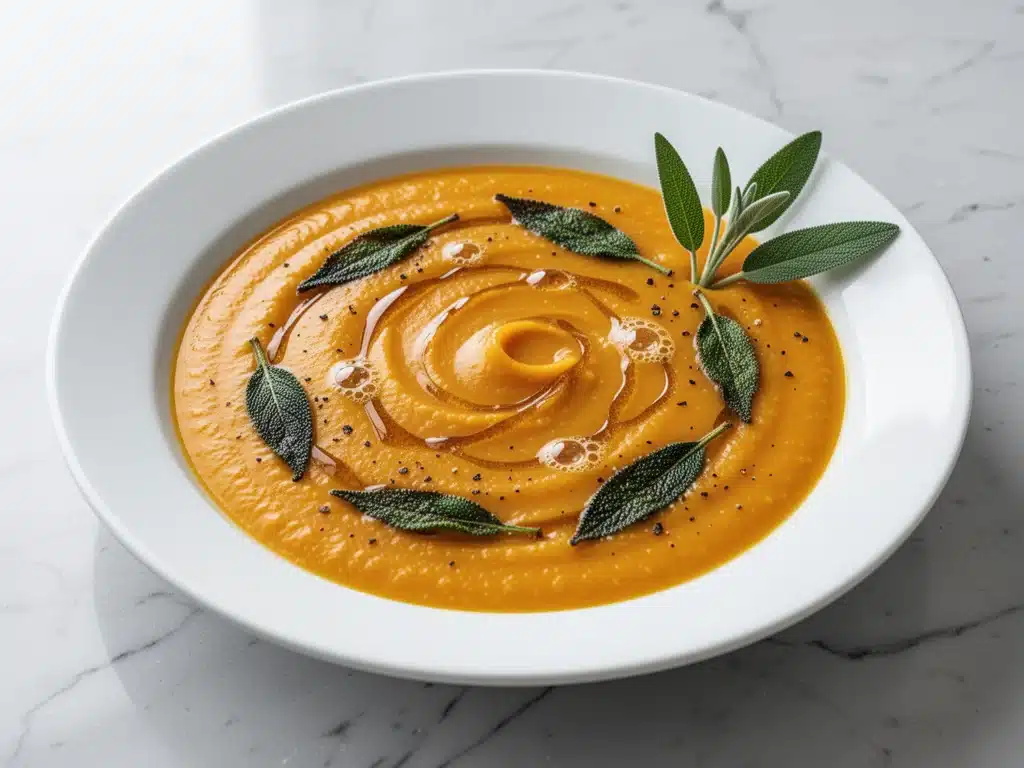
Last November, I was standing in my kitchen at 6:30 PM on a Tuesday, staring at a half-peeled butternut squash like it had personally offended me. It was raining outside, the house felt cold, and my kids were already arguing over who got the bigger slice of cheese stick. I wanted something warm, something that smelled like comfort, but I absolutely did not want to spend three hours roasting vegetables while trying to keep my sanity intact.
So I threw the squash in the oven with a bunch of garlic, some onions, and a splash of apple cider. I figured if it worked, great. If not, we were having grilled cheese. Twenty minutes later, the kitchen smelled like a Thanksgiving dinner that actually happened on a random Tuesday. I blended it up, stirred in a little heavy cream, and took a spoonful. I closed my eyes. It was velvety, sweet, slightly smoky, and just creamy enough to make my husband ask what I put in it (the answer was: nothing fancy, just good technique).
That was six months ago. Since then, I’ve made this butternut squash soup at least a dozen times. It’s become my go-to when the weather turns crisp, when I need dinner to just work, and when I want to feel cozy without the stress. I’ve tweaked it, tested it, and even let my picky toddler “help” chop (read: throw things at the floor). The result is a recipe that’s foolproof, deeply flavorful, and surprisingly fast for a soup that tastes like it simmered all day.
This isn’t just another pumpkin spice version. This is real, roasted, savory-sweet comfort in a bowl. And once you try it, I guarantee you’ll be making it every week until spring.
Why You’ll Love This Butternut Squash Soup
There are a lot of squash recipes out there. Some are watery. Some are too sweet. Some take forever. This one? It hits the sweet spot every single time. Here’s why it’s earned a permanent spot in my fall rotation:
- Roasting Over Boiling — Most people boil their squash, which dilutes the flavor. I roast it first. The high heat caramelizes the natural sugars, giving the soup a deep, rich taste that boiled squash just can’t match. Trust me, your taste buds will notice the difference immediately.
- Under 45 Minutes Total — Yes, really. The squash roasts while you chop other things, and the blending takes two minutes. It’s faster than ordering takeout and way healthier. I make this on nights when I’m exhausted and just want to sit down.
- One-Pot Wonder (Almost) — You only use the roasting sheet and one large pot. Cleanup is minimal. I love recipes that don’t leave me with a sink full of dishes after dinner.
- Freezer-Friendly — I make double batches when squash is on sale and freeze it in portions. It reheats perfectly. This is my secret weapon for busy weeknights when I forgot to thaw chicken or plan dinner.
- Kid-Approved Comfort — My kids, who usually turn their noses up at anything orange, ask for this regularly. The sweetness from the roasted squash and apples hides the veggie taste perfectly. If they like it, it’s a win in my book.
- Customizable Toppings — You can keep it simple or go fancy. I love it with a drizzle of brown butter, but my husband prefers crispy bacon bits. It’s your bowl, your rules.
This soup is my answer to “what’s for dinner?” when I want something warm, healthy, and satisfying. It’s the kind of meal that makes everyone at the table happy, including the one who claims they’re “too tired to eat.”
Ingredients You’ll Need
Here’s the best part: you probably have most of this already. It’s simple, seasonal, and pantry-friendly. I’m particular about three things here, so pay attention to those.
For the Roasted Base
Butternut squash (1 large, about 3-4 lbs / 1.5 kg) — Look for one that feels heavy for its size and has a matte, tan skin. I buy it pre-cut from the store when I’m in a rush, but peeling it yourself saves money and gives you better control. Cut into 1-inch cubes—uniform pieces cook evenly.
Yellow onion (1 medium, chopped / about 150g) — Sweet and aromatic. I chop it rough; it’s going to blend anyway. Don’t skip this—it adds the savory backbone to the sweetness.
Garlic (4 cloves, minced / about 2 tablespoons) — Fresh only. Jarred garlic tastes metallic in roasted soups. Minced is fine, but crushed is better if you want maximum flavor.
Apple (1 medium Honeycrisp or Gala, peeled and diced / about 150g) — This is my secret. The apple adds natural sweetness and a subtle tartness that balances the squash. I use Honeycrisp because it holds its shape a bit and has a nice crunch before blending.
Olive oil (2 tablespoons / 30ml) — Use extra virgin for the best flavor. Toss the squash and veggies in this before roasting.
Salt and black pepper — Generous amounts. I use about 1 teaspoon kosher salt for the roasting tray. Seasoning the squash *before* roasting builds flavor from the inside out.
For the Soup Base
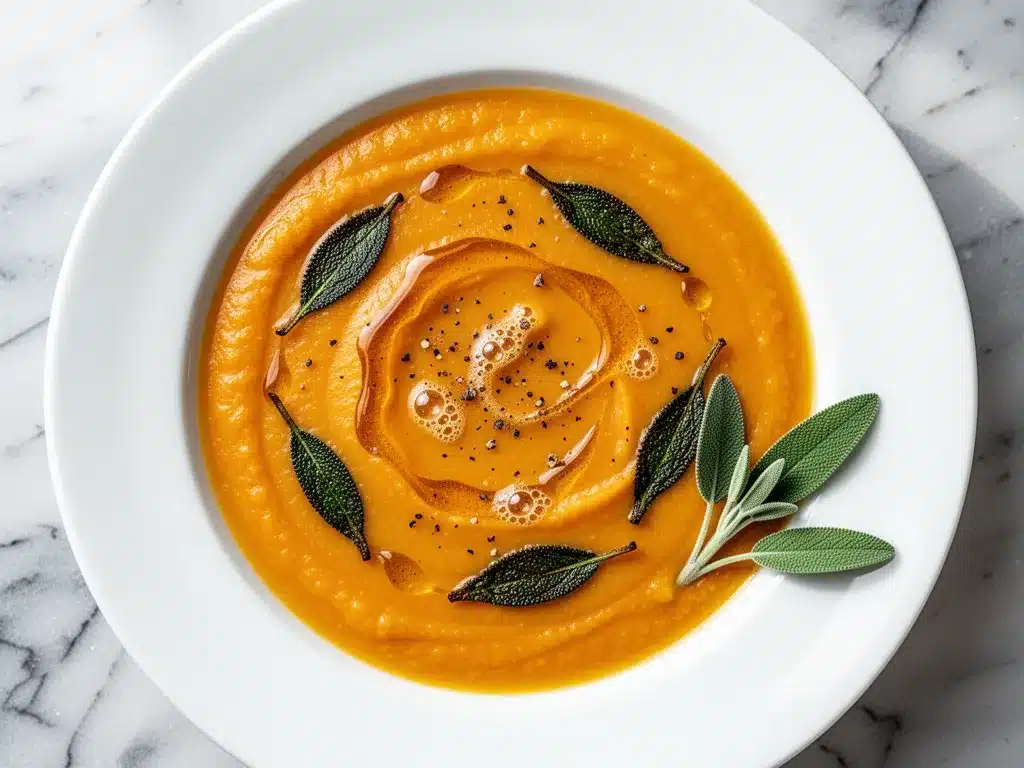
Vegetable or chicken broth (4 cups / 960ml) — I use low-sodium broth so I can control the salt level. Chicken broth adds a richer mouthfeel, but vegetable broth keeps it vegetarian. Both work beautifully.
Heavy cream (½ cup / 120ml) — Optional but recommended. It makes the soup luxuriously creamy. For a lighter version, use half-and-half or coconut milk. I use heavy cream when I want to feel fancy.
Butter (2 tablespoons / 30g) — For sautéing the aromatics. Salted or unsalted works, but adjust salt accordingly.
Ground ginger (½ teaspoon) — Adds warmth. Fresh ginger is better if you have it, but ground is convenient and works well here.
Ground nutmeg (¼ teaspoon) — Just a pinch. It enhances the squash flavor without tasting like spice cake. Too much and it tastes like pumpkin pie, which isn’t what we’re going for.
Apple cider (¼ cup / 60ml) — Optional but highly recommended. I add this for a bright, tangy note that cuts through the richness. If you don’t have it, apple juice works in a pinch.
For Toppings (Optional but Worth It)
Crispy bacon bits — Savory crunch against creamy soup. Game changer.
Roasted pumpkin seeds — Adds texture and a nutty flavor. I toast them in a dry pan for 3 minutes.
Green onions — Sliced thinly for a fresh, sharp bite.
Brown butter — Drizzle a teaspoon on top for a nutty, rich finish. I make this separately but it’s so easy.
Croutons — Store-bought or homemade. I like them crunchy and garlicky.
Equipment Needed
You don’t need fancy gadgets for this. Here’s what I actually use:
Large roasting pan or baking sheet — I use a rimmed baking sheet. It needs to fit the squash in a single layer so it roasts, not steams. If your squash is huge, you might need two sheets.
Dutch oven or large pot — 6-quart is ideal. It needs to hold the roasted squash, broth, and blending volume. My heavy-bottomed pot distributes heat evenly, which prevents scorching.
Immersion blender or standard blender — An immersion blender is easiest because you blend right in the pot. No hot soup transfer required (and no burns). If you use a standard blender, blend in batches and vent the lid to avoid explosions. Hot soup expands. I learned this the hard way with a clean kitchen ceiling.
Sharp knife and cutting board — For chopping squash and onions. A heavy chef’s knife makes cutting squash much safer. If your squash is rock hard, microwave it for 2 minutes first to soften it slightly.
Wooden spoon — For stirring. Silicone works too.
Measuring cups and spoons — Standard stuff.
Colander — Not strictly needed, but handy if you want to drain excess liquid from the roasting pan.
How to Make It: Step-by-Step
Alright, let’s make this! I’m walking you through exactly how I do it, including the little tricks I’ve picked up over dozens of batches.
Step 1: Roast the Squash (30-35 minutes)
Preheat your oven to 400°F (200°C). Line a large baking sheet with parchment paper for easy cleanup. In a large bowl, toss the cubed butternut squash, chopped onion, diced apple, minced garlic, olive oil, salt, and pepper. Make sure everything is coated in oil—that’s how it caramelizes.
Spread everything in a single layer on the baking sheet. Don’t overcrowd! If the pieces are touching, they’ll steam instead of roast. Roast for 30-35 minutes, stirring halfway through, until the squash is tender and edges are browned. You should be able to pierce a cube easily with a fork. The browning is where the flavor lives, so don’t skip it.
Step 2: Sauté the Aromatics (5 minutes)
While the squash roasts, heat butter in your Dutch oven or large pot over medium heat. Add a pinch of salt, ground ginger, and nutmeg to the melting butter. Stir for 30 seconds until fragrant. This blooms the spices and infuses the butter with flavor.
Once the squash is done roasting, carefully transfer everything from the baking sheet into the pot. Use a spatula to scrape up any caramelized bits stuck to the pan—those are flavor gold.
Step 3: Simmer and Blend (10 minutes)
Pour in the broth and apple cider (if using). Stir to combine. Bring to a gentle simmer over medium heat. Let it bubble for 5-7 minutes to meld the flavors. The squash should be very soft by now.
Remove from heat. Carefully blend the soup until completely smooth. If using an immersion blender, pulse until no chunks remain. If using a standard blender, blend in batches, leaving the vent hole open to let steam escape. Cover the hole with a towel to catch splatters. Blend until silky smooth.
Step 4: Finish and Season (2 minutes)
Return the pot to low heat. Stir in the heavy cream (if using). Taste the soup. This is the most important step. Add more salt if needed. Add more pepper for heat. If it’s too thick, add a splash of broth. If it’s too thin, let it simmer for a few more minutes.
Adjust the acid if needed—a tiny splash of vinegar or lemon juice can brighten it up if it tastes flat. Serve immediately.
Expert Tips & Tricks
Here’s everything I’ve learned from making this dozens of times. These tips will save you from my mistakes.
Roast, Don’t Steam — The biggest mistake people make is crowding the pan. If the squash pieces are touching, they steam. Spread them out. You want those edges to get crispy and brown. That caramelization is what makes the soup taste deep and complex, not bland and watery.
Save the Seeds — When you scoop out the squash, don’t throw away the seeds! Rinse them, toss with a little salt and olive oil, and roast at 350°F for 10-15 minutes. They make amazing snacks or topping for the soup. Zero waste, maximum flavor.
Blend While Hot — Hot soup blends smoother. If you let it cool, it thickens and becomes harder to puree. Blend immediately after roasting and simmering.
Acid is Key — Squash is sweet. Cream is rich. Without acid, the soup can taste one-dimensional. A splash of apple cider, a squeeze of lemon, or a dash of vinegar at the end wakes everything up. I always taste and adjust acid before serving.
Don’t Skimp on Salt — Roasting concentrates flavors, but it also dulls saltiness. Taste the roasted squash before blending. If it’s bland, the soup will be bland. Season well at every stage.
Common Mistake: Grainy Soup — This happens if you don’t blend long enough. Squash has fibrous strands. Blend for a full 1-2 minutes after the chunks disappear to get that restaurant-quality smoothness.
Pro Trick: Brown Butter Drizzle — Melt 2 tablespoons of butter in a small pan over medium heat. Swirl it until it turns golden brown and smells nutty (about 3-4 minutes). Drizzle over each bowl before serving. It adds a layer of sophistication that makes you feel like a pro chef.
Variations & Substitutions
Once you’ve nailed the basic version, here’s how you can mix it up. I’ve tried all of these.
Vegan Version — Skip the butter and heavy cream. Use olive oil for roasting and coconut milk or cashew cream for the finish. It’s creamy, rich, and completely plant-based. My vegan friends love this version.
Spicy Kick — Add ½ teaspoon cayenne pepper or a diced jalapeño when sautéing the aromatics. The heat balances the sweetness perfectly.
Curry Twist — Swap ginger and nutmeg for 1 teaspoon curry powder and ½ teaspoon turmeric. It changes the flavor profile completely but keeps the same texture. Great with coconut milk.
Ham and Bean — Stir in diced ham and white beans in the last 5 minutes of simmering. Turns it into a hearty meal soup. I do this when I need something more filling.
Sausage Style — Brown crumbled Italian sausage in the pot before adding the broth. Adds a savory, herbal depth. My husband’s favorite variation.
Gluten-Free — This recipe is naturally gluten-free. Just check your broth label to ensure no additives.
Low-Carb — Skip the apple and reduce the broth slightly. Use heavy cream or coconut cream. It’s still satisfying without the extra carbs.
Serving & Storage
How to Serve: I serve this straight from the pot, ladled into wide bowls. It looks beautiful with a swirl of cream and a sprinkle of green onions. Pair it with soft garlic knots with parmesan for a complete cozy meal. The garlic bread soaks up the soup perfectly.
Side Dishes: A simple green salad with vinaigrette cuts the richness. Roasted Brussels sprouts (try my crispy garlic parmesan smashed Brussels sprouts) add a nice crunch. Or just crusty bread.
Storage: Store in an airtight container in the fridge for up to 5 days. The soup thickens as it cools—this is normal.
Reheating: Reheat gently over low heat on the stove, adding a splash of broth or milk to thin it out. Microwave works too, but stir frequently to prevent hot spots. Never boil it, or the cream might separate.
Freezing: Yes, it freezes well! Cool completely, then freeze in portions for up to 3 months. Thaw in the fridge overnight and reheat gently. The texture might be slightly different but it’s still delicious.
Nutrition Information
I’m not a nutritionist, but here’s the breakdown if you’re tracking. This is per serving (based on 6 servings):
- Calories: 280
- Protein: 6g
- Carbs: 38g
- Fiber: 6g
- Sugar: 14g
- Fat: 12g
- Saturated Fat: 7g
- Sodium: 650mg
What’s Good: High in fiber and vitamins A and C. Great source of potassium. The apple adds antioxidants.
What to Know: Higher in calories if you add cream and toppings. Use low-sodium broth and skip the cream to reduce calories. It’s comfort food, so enjoy it mindfully.
Final Thoughts
So that’s my go-to butternut squash soup! I’ve probably talked your ear off at this point, but when you make a recipe this often, you have a lot to say about it. This has saved weeknight dinners more times than I can count. It’s my answer to “what’s for dinner?” when I’m tired, don’t want takeout, and still want something that tastes really good.
My kids are happy, my husband’s happy, and I’m happy because I’m not stressed about cooking. Make it yours! Try different toppings, swap in your favorite apple, adjust the spices. The best recipes are the ones you adapt to your family’s tastes.
If you make this, drop a comment and let me know what you think! I love hearing how recipes turn out in your kitchen. And if something doesn’t work, tell me that too—I’m here to help troubleshoot. Happy cooking! And I hope your kitchen smells half as good as mine does right now.
Frequently Asked Questions
Can I use frozen butternut squash?
You can, but fresh tastes better. Frozen squash can be watery and mushy. If you must use frozen, thaw it completely and drain excess liquid before roasting. I prefer fresh because the roasting process caramelizes the natural sugars, which frozen squash just doesn’t do as well.
Why is my soup too thin?
This usually means you added too much broth or didn’t roast the squash long enough to concentrate the flavor. Let it simmer uncovered for 10-15 minutes to reduce. Or, add a potato while simmering—it thickens the soup naturally. Blend it all together and you’re good to go.
Can I make this ahead for a dinner party?
Absolutely. Make the soup up to 2 days ahead and store in the fridge. Reheat gently and add the cream right before serving. It actually tastes better the next day because the flavors have time to meld. I do this all the time for holiday gatherings.
Why did my soup turn out grainy?
The blender didn’t run long enough. Squash has fibrous strands that need time to break down. Blend for a full 1-2 minutes after the chunks disappear. If you’re using a standard blender, pause and scrape down the sides, then blend again. You want it silky smooth.
Can I use maple syrup instead of apple?
You can, but the apple adds texture and natural pectin that helps thicken the soup. If you use maple syrup, add only 2 tablespoons and taste carefully. It’s much sweeter than an apple, so you don’t want it to taste like dessert. I stick with the apple for balance.
How do I reheat leftovers without it getting dry?
Add a splash of milk, cream, or broth to the pot when reheating. This brings back the creamy texture. Microwave works too, but definitely add liquid first and stir frequently. Never boil it, or the cream might separate.
Can I double this recipe?
Yes! Double everything and use your biggest pot. The cooking times stay the same. Just make sure your roasting pan isn’t overcrowded—you might need two sheets. I double this when I’m meal-prepping for the week.
Pin This Recipe!
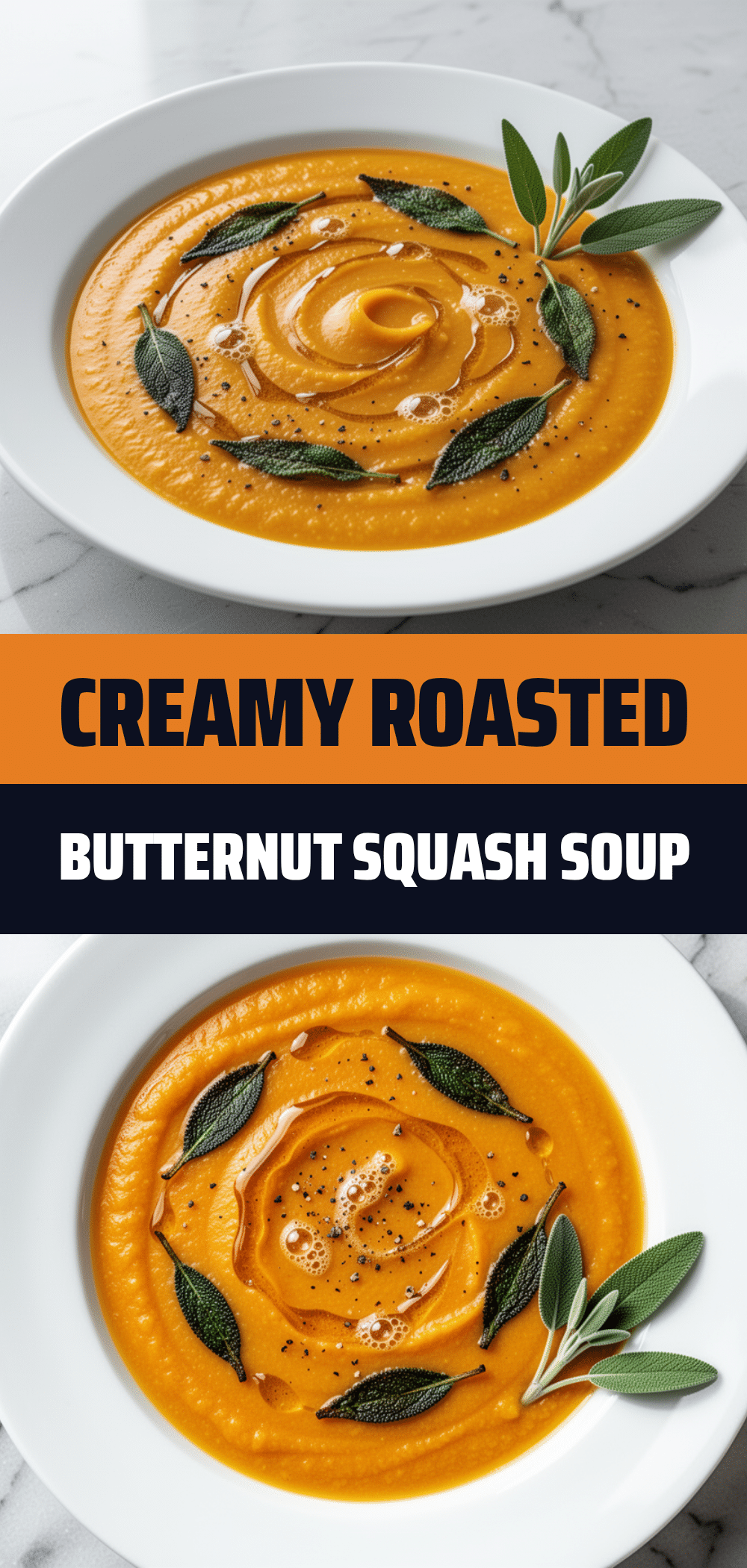

Butternut Squash Soup: Easy Fall Recipe
- Total Time: 45 minutes
- Yield: 6 servings 1x
Description
A velvety, roasted butternut squash soup that is sweet, slightly smoky, and creamy. This foolproof recipe takes under 45 minutes and delivers deep, rich flavor perfect for cozy fall evenings.
Ingredients
- 1 large butternut squash (about 3–4 lbs / 1.5 kg), peeled and cut into 1-inch cubes
- 1 medium yellow onion, chopped
- 4 cloves garlic, minced
- 1 medium Honeycrisp or Gala apple, peeled and diced
- 2 tablespoons extra virgin olive oil
- 1 teaspoon kosher salt (for roasting)
- Black pepper, to taste
- 2 tablespoons butter
- 1/2 teaspoon ground ginger
- 1/4 teaspoon ground nutmeg
- 4 cups low-sodium vegetable or chicken broth
- 1/4 cup apple cider
- 1/2 cup heavy cream (optional)
- Salt and pepper, to taste for finishing
Instructions
- Preheat oven to 400°F (200°C). Line a large baking sheet with parchment paper.
- In a large bowl, toss cubed squash, chopped onion, diced apple, minced garlic, olive oil, salt, and pepper until evenly coated.
- Spread ingredients in a single layer on the baking sheet. Roast for 30-35 minutes, stirring halfway, until squash is tender and edges are browned.
- While squash roasts, melt butter in a Dutch oven or large pot over medium heat. Add ginger and nutmeg, stirring for 30 seconds until fragrant.
- Transfer roasted squash and vegetables to the pot, scraping up any caramelized bits from the pan.
- Pour in broth and apple cider. Stir to combine and bring to a gentle simmer. Cook for 5-7 minutes.
- Remove from heat and blend soup until completely smooth using an immersion blender or standard blender.
- Return pot to low heat. Stir in heavy cream if using. Taste and adjust seasoning with salt, pepper, or a splash of acid (vinegar/lemon) if needed.
- Serve immediately with desired toppings.
Notes
Roast the squash in a single layer to ensure caramelization rather than steaming. Save the squash seeds, toss with oil and salt, and roast at 350°F for 10-15 minutes for a crunchy topping. Blend the soup while hot for the smoothest texture. If the soup is too thick, add more broth; if too thin, simmer uncovered to reduce.
- Prep Time: 15 minutes
- Cook Time: 30 minutes
- Category: Main Course
- Cuisine: American
Nutrition
- Serving Size: 1 bowl
- Calories: 280
- Sugar: 14
- Sodium: 650
- Fat: 12
- Saturated Fat: 7
- Carbohydrates: 38
- Fiber: 6
- Protein: 6
Keywords: butternut squash soup, fall recipe, easy soup, roasted squash, comfort food, vegetarian, gluten-free, quick dinner